The Rise of AI Washing: How to Tell Real AI from Marketing Hype
What Is AI Washing?
Artificial intelligence has rapidly become one of the most powerful marketing terms in business. Today, products across nearly every industry claim to be “AI-powered,” “AI-driven,” or “built with artificial intelligence.” From enterprise software to consumer applications, AI branding has become almost unavoidable.
But beneath the excitement surrounding artificial intelligence lies a growing problem that many businesses are only beginning to recognize.
Not everything labeled as AI actually involves meaningful artificial intelligence.
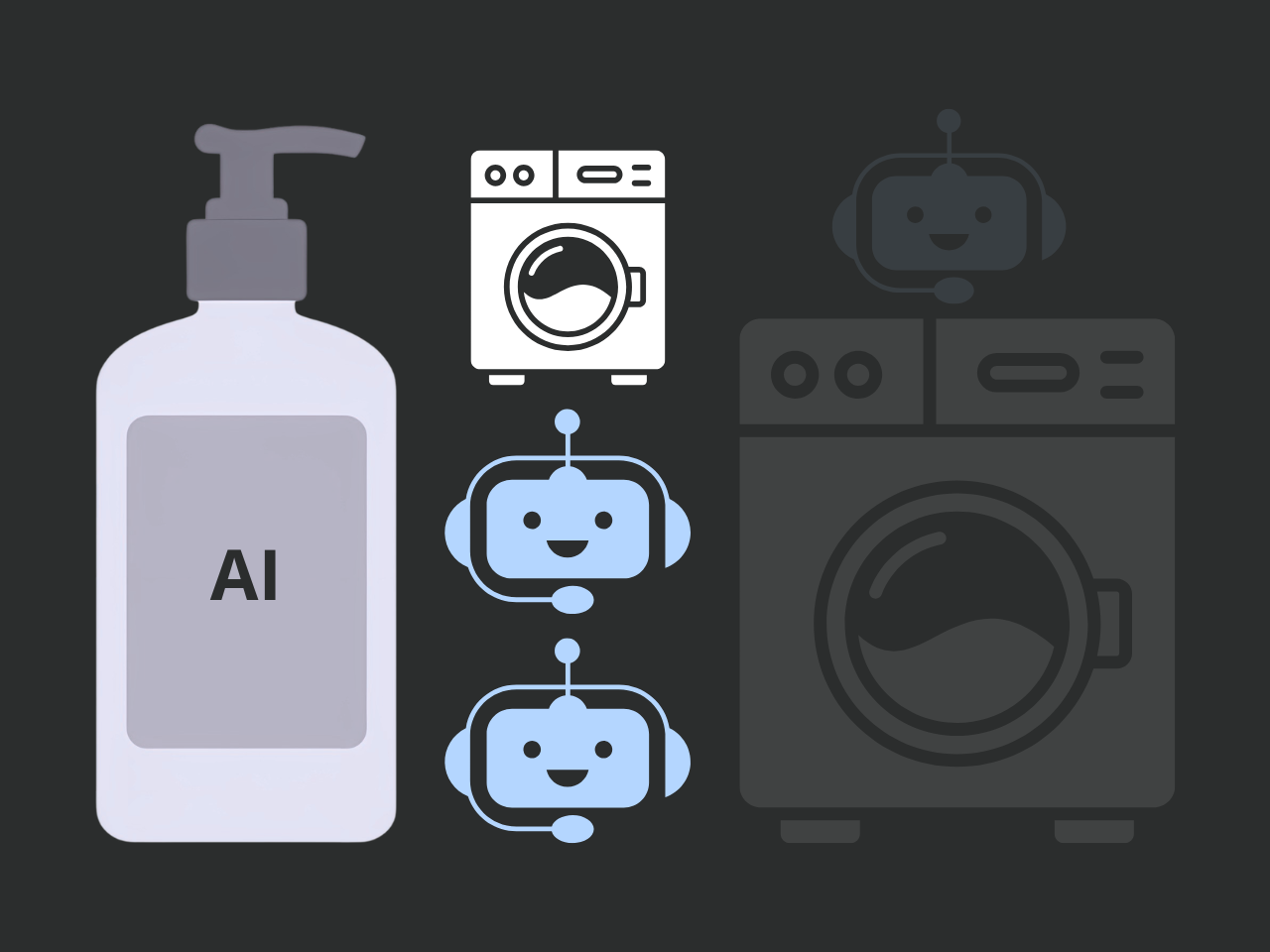
This growing trend is commonly referred to as AI washing.
AI washing occurs when companies market products, services, or features as artificial intelligence even when the underlying technology is little more than standard automation, basic statistical logic, or conventional software rules. In many cases, the technology being marketed as AI has existed for years. The label changes, but the functionality often does not.
For business leaders evaluating software, platforms, or digital transformation initiatives, understanding AI washing has become increasingly important. Organizations that fail to distinguish genuine AI capability from marketing language risk overspending on ineffective tools, adopting unrealistic expectations, and creating skepticism toward future innovation projects.
Why AI Washing Is Increasing
The rapid growth of generative AI tools such as ChatGPT, Claude, and Microsoft Copilot has accelerated this issue significantly. Businesses across industries now feel pressure to position themselves as AI-driven organizations regardless of how much artificial intelligence actually exists within their products or services.
This pressure affects vendors, consultants, software providers, and even internal business teams. When competitors begin advertising AI capabilities, others often follow simply to avoid appearing outdated. In many cases, the AI label itself becomes more important than the actual technology.
Another reason AI washing is increasing is because most buyers are not technical specialists. Many decision-makers understand the business opportunity surrounding AI but do not necessarily understand the technical distinction between automation, analytics, machine learning, and generative AI.
As a result, businesses now operate in an environment where the term “AI” is frequently used without clear definition. That creates confusion for buyers trying to make informed technology decisions.
The Difference Between Automation and Artificial Intelligence
One of the most important distinctions businesses must understand is that automation and artificial intelligence are not the same thing.
Automation follows predefined instructions. Artificial intelligence typically involves systems capable of identifying patterns, generating outputs, adapting based on data, or making probabilistic predictions.
For example, a traditional workflow may automatically send an email when a customer submits a form. The system follows fixed instructions and does not learn from experience. This is automation.
By contrast, an AI system may analyze customer messages, identify intent, generate personalized responses, and improve performance over time using training data. That involves pattern recognition and probabilistic modeling.
The distinction matters because many vendors describe automation features as AI even when no intelligent capability exists. Businesses often assume the software is capable of learning or adapting when it is actually operating through simple rules.
This does not mean automation is bad. Many automated systems provide excellent operational value. The issue arises when companies pay premium prices based on exaggerated AI claims.
Common Examples of AI Washing
AI washing appears in many forms across different industries, often in ways that sound sophisticated on the surface but involve very little genuine artificial intelligence underneath.
One common example is “AI-powered recommendations.” In some systems, these recommendations are generated through simple rule-based logic rather than machine learning. A skincare application may claim to use artificial intelligence to recommend products when the system is simply matching customer answers to a fixed list of outcomes.
Another example is “AI-curated content.” In many cases, these systems are simply using keyword filtering or category sorting tools that have existed for decades. The AI label creates the impression of intelligent analysis even when the process remains relatively basic.
The term “intelligent automation” also deserves careful scrutiny. Many workflow systems marketed as intelligent are simply following fixed decision trees. They automate repetitive tasks but do not learn, adapt, or improve based on data.
Businesses should also pay attention to vague claims such as “powered by advanced AI technology.” These phrases often sound impressive while revealing very little about what the software actually does.
The problem is not that automation or rule-based systems are inherently bad. Many conventional tools deliver excellent business value. The problem arises when businesses pay premium prices based on the assumption that they are purchasing advanced artificial intelligence capabilities when they are not.
Why AI Washing Is Dangerous for Businesses
AI washing is not merely a marketing annoyance. It creates real business risks.
One of the biggest risks is budget misallocation. Businesses may pay premium prices for software that delivers little more functionality than conventional tools. The “AI” label often increases perceived value even when the underlying capability remains relatively basic.
Another major risk is failed expectations. When leadership expects transformational results from tools that lack meaningful AI functionality, disappointment becomes almost inevitable. This can damage confidence in future technology initiatives and make organizations more resistant to legitimate innovation projects later.
Vendor dependency is another concern. Some providers overstate their AI capabilities during sales processes. Once integrated into business operations, organizations may become dependent on underperforming platforms that are difficult or expensive to replace.
Operational confusion can also occur when businesses incorrectly assume certain workflows are fully AI-enabled when they still require substantial manual oversight.
Perhaps most importantly, AI washing creates strategic confusion. Businesses may believe they are modernizing operations through advanced technology when they are simply repackaging existing workflows under new branding.
How Businesses Can Evaluate Real AI Capability
The good news is that organizations do not need advanced technical expertise to identify exaggerated AI claims. In many cases, asking the right questions is enough.
One of the most important questions is whether the vendor can clearly explain what type of AI model is actually being used. A credible provider should be able to describe whether the system relies on machine learning, large language models, predictive analytics, or another form of artificial intelligence.
Businesses should also ask what data the system learns from and how the model improves over time. Genuine AI systems generally depend on training data. If the vendor cannot explain how learning occurs, the product may simply be automation rather than artificial intelligence.
A live demonstration is often more revealing than marketing materials. Businesses should ask vendors to show the system generating outputs in real time and explain its limitations openly.
Legitimate AI vendors usually acknowledge that no system is perfect. They discuss accuracy boundaries, human oversight requirements, and situations where the technology may fail.
Final Thoughts
Artificial intelligence is rapidly reshaping business technology, but as interest in AI grows, so does the amount of marketing hype surrounding it.
Real artificial intelligence should improve business performance in concrete, explainable ways. If a vendor cannot clearly explain what their AI does, what data it uses, how it improves, and where its limitations exist, businesses should evaluate those claims carefully before making any investment.
The future of AI in business is significant and very real. But successful adoption depends on clarity, discipline, and informed decision-making rather than marketing hype alone.
At Infinity IT Group, we believe businesses should approach artificial intelligence with clarity rather than hype. Successful AI adoption is not about adding AI labels to existing systems or rushing into technology investments without a clear operational goal. It is about understanding where AI can genuinely improve workflows, productivity, and decision-making. Our approach focuses on practical implementation, realistic expectations, and measurable business outcomes, helping organizations evaluate technology based on real value instead of marketing language.
Contact us today to discuss how AI can support your operational goals effectively and responsibly.